
CS/AI Ambassador Program + Campus Technology Leadership
Campus leadership work across portfolio workshops, hackathons, student panels, outreach events, facilitator kits, and CS/AI community building.
- ↗ Contributed to campus leadership work across portfolio workshops, hackathons, student panels, outreach events, facilitator kits, and CS/AI community building.
- ↗ Helped students translate technical coursework into visible projects, portfolios, and professional presence.
- ↗ Recognized with the High Contributor CS/AI Ambassador Award.
Overview
As a Computer Science Ambassador at the University of Arizona, I contributed to campus programming that helped students see computer science and AI as more than coursework.
The work included digital portfolio workshops, admitted student programming, high-school panels, MESA competition support, monthly planning, toolkit development, hackathon support, and student outreach.
This became a way to help students move from learning technical concepts to showing what they could build, explain, and contribute.
The problem
Many students need practical bridges between classes and careers.
They may be learning computer science, but still need help with questions like:
- How do I present my projects?
- How do I turn coursework into a portfolio?
- How do I prepare for recruiting?
- How do I explain technical work clearly?
- How do I build confidence in a CS/AI community?
- How do I find opportunities beyond the classroom?
The gap is not always technical ability. Often, the gap is visibility, confidence, structure, and access to repeatable resources.
My role
I helped design, support, and deliver student-facing programming across multiple CS/AI Ambassador initiatives.
My work included:
- Supporting portfolio-building workshops
- Helping students understand GitHub Pages and project presentation
- Contributing to hackathon and case/coding event operations
- Supporting student panels and outreach events
- Helping create facilitator resources, scripts, templates, and walkthroughs
- Contributing to monthly planning and campus community-building efforts
The goal was to make technical learning feel more actionable, visible, and connected to real opportunities.
Product thinking behind the work
Even though this was a campus leadership role, I approached the work like a product and operations problem.
The “users” were students trying to grow professionally. The “product” was repeatable programming that could help them take a next step.
That meant focusing on:
- Clear workshop structure
- Practical templates
- Beginner-friendly explanations
- Repeatable event formats
- Student confidence
- Better onboarding into CS/AI opportunities
The best student programming is not just inspirational. It gives people something concrete to do next.
Impact
This work created repeatable student-facing programming and helped build a culture where students could support each other, share resources, and turn technical learning into visible outcomes.
It also helped students connect technical identity with professional presence: projects, portfolios, storytelling, GitHub, and confidence.
The work contributed to recognition as a High Contributor CS/AI Ambassador.
Visual proof
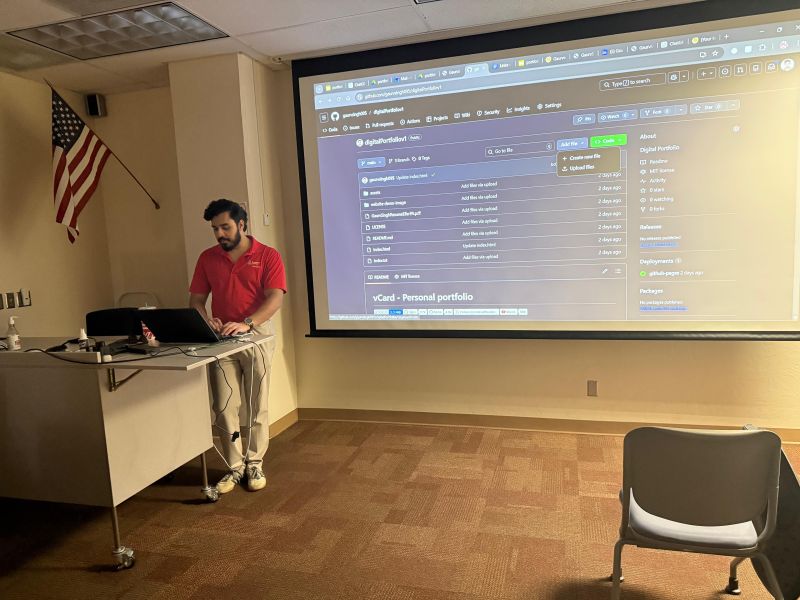
CS Ambassador portfolio workshop instruction session.
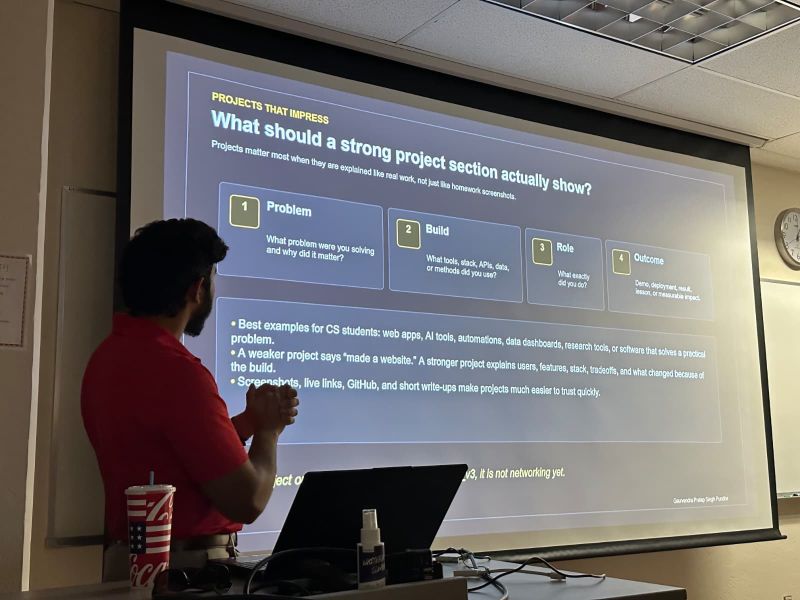
AI and portfolio-building presentation for students.
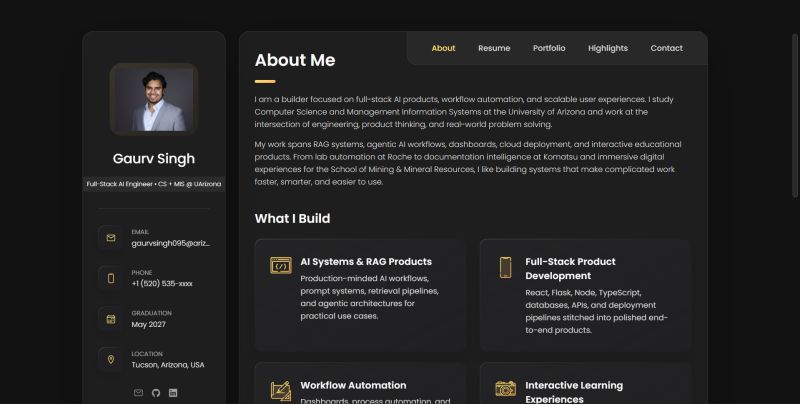
Portfolio website demo used during the workshop.
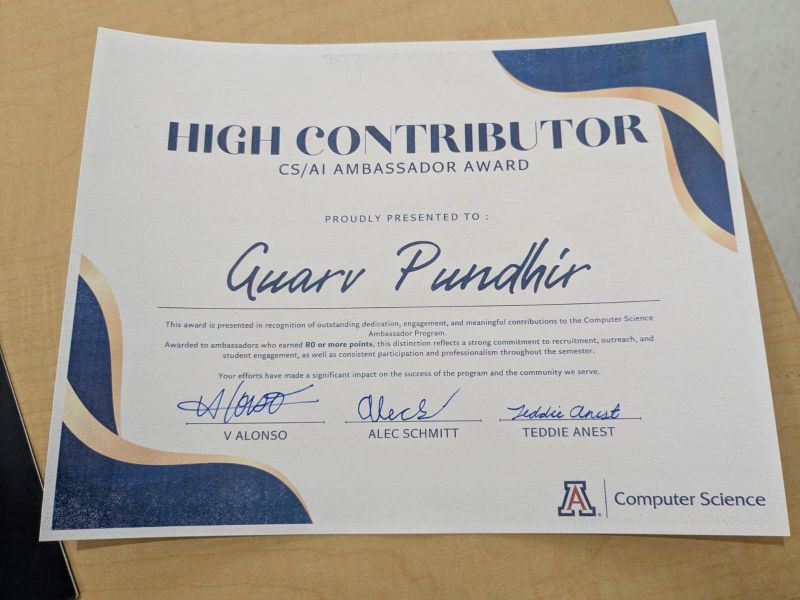
High Contributor recognition from the CS/AI Ambassador program.
What I learned
Campus leadership is operational design.
Strong communities are not built only through one-off events. They are built through repeatable formats, clear resources, consistent communication, and people willing to make it easier for others to start.
This work also reinforced one of my core product belief: the best systems reduce friction for the next person.