
PathWise AI — Career & Advising Action Layer
A student-first AI product that turns academic and career uncertainty into interactive maps, personalized roadmaps, and coach-ready next steps.
- ↗ Built a live career exploration and advising product around maps, personalized roadmaps, and next-step planning.
- ↗ Positioned PathWise as an action layer for students, advisors, career centers, departments, and student-facing programs.
- ↗ Opened early pilot and collaboration conversations through university, startup, and ecosystem channels.
- ↗ Turned the broader KeyVoid / Advisor AI vision into a clearer institutional product direction.
Overview
PathWise AI began from a pattern I kept seeing around students: ambition was not the issue. Direction was.
Students are surrounded by degree pages, role descriptions, advising notes, clubs, certificates, job boards, career platforms, and random advice. But the real question often remains unresolved:
What should I actually do next, and why does that step fit me?
PathWise is my answer to that problem.
It is a student-first career and advising action layer that helps users move from uncertainty to direction through exploration, interactive maps, personalized recommendations, roadmap generation, and coach-ready summaries.
The goal is not to replace advisors, coaches, or career centers. The goal is to help students arrive better prepared, with more context, clearer options, and a stronger next-step plan.
The problem
Most student-success tools create more surfaces, not more clarity.
Students are expected to piece together:
- Degree requirements
- Career outcomes
- Skill gaps
- Certificates
- Internships
- Clubs and campus opportunities
- Advising notes
- Long-term plans
- Weekly next steps
That creates a gap between information access and action readiness.
A student may technically have access to everything they need, but still not know how to turn that information into a path.
PathWise is designed to close that gap.
Users and stakeholders
PathWise is built for multiple layers of the student-success ecosystem.
The core users and stakeholders include:
- Students who need clarity around majors, careers, and opportunities
- Advisors who want students to arrive with better context
- Career centers that need more actionable coaching summaries
- Departments that want pathway visibility and student engagement
- Student-facing programs that need customizable exploration experiences
- Institutions trying to improve preparation, retention, and career outcomes
The core design principle is simple:
The student experience should feel guided and simple. The institutional layer should be configurable.
My role
I led the product direction, positioning, early workflow design, demo strategy, and full-stack implementation direction.
My work included:
- Defining the product narrative and core user problem
- Translating the KeyVoid / Advisor AI vision into a sharper product direction
- Scoping the main exploration, mapping, roadmap, and summary flows
- Designing the product around student action rather than passive recommendations
- Building and iterating on the live platform
- Testing the experience through demos and early user conversations
- Positioning the product for pilot conversations with student-facing programs
- Connecting the product story to advising, career navigation, and institutional workflows
PathWise became the clearest expression of the product system I wanted to build: not just an AI recommender, but a workflow that helps students take better next steps.
Product decisions
The most important decision was to frame PathWise as an action layer, not another dashboard.
That meant the product could not stop at showing information. It had to help a student move from exploration to a usable plan.
The first product system was organized around four core flows:
- Exploration — helping users discover possible majors, roles, skills, and directions.
- Interactive maps — making pathways visual instead of buried in text.
- Personalized roadmaps — turning interests and goals into structured next steps.
- Coach-ready summaries — helping students bring better context into advising or career conversations.
The strongest product insight was that students do not only need recommendations. They need confidence, sequencing, and a way to explain their direction to another person.
Product visuals
These visuals show the product layer of PathWise: career maps, guided exploration, and roadmap-style outputs designed to move students from uncertainty to action.
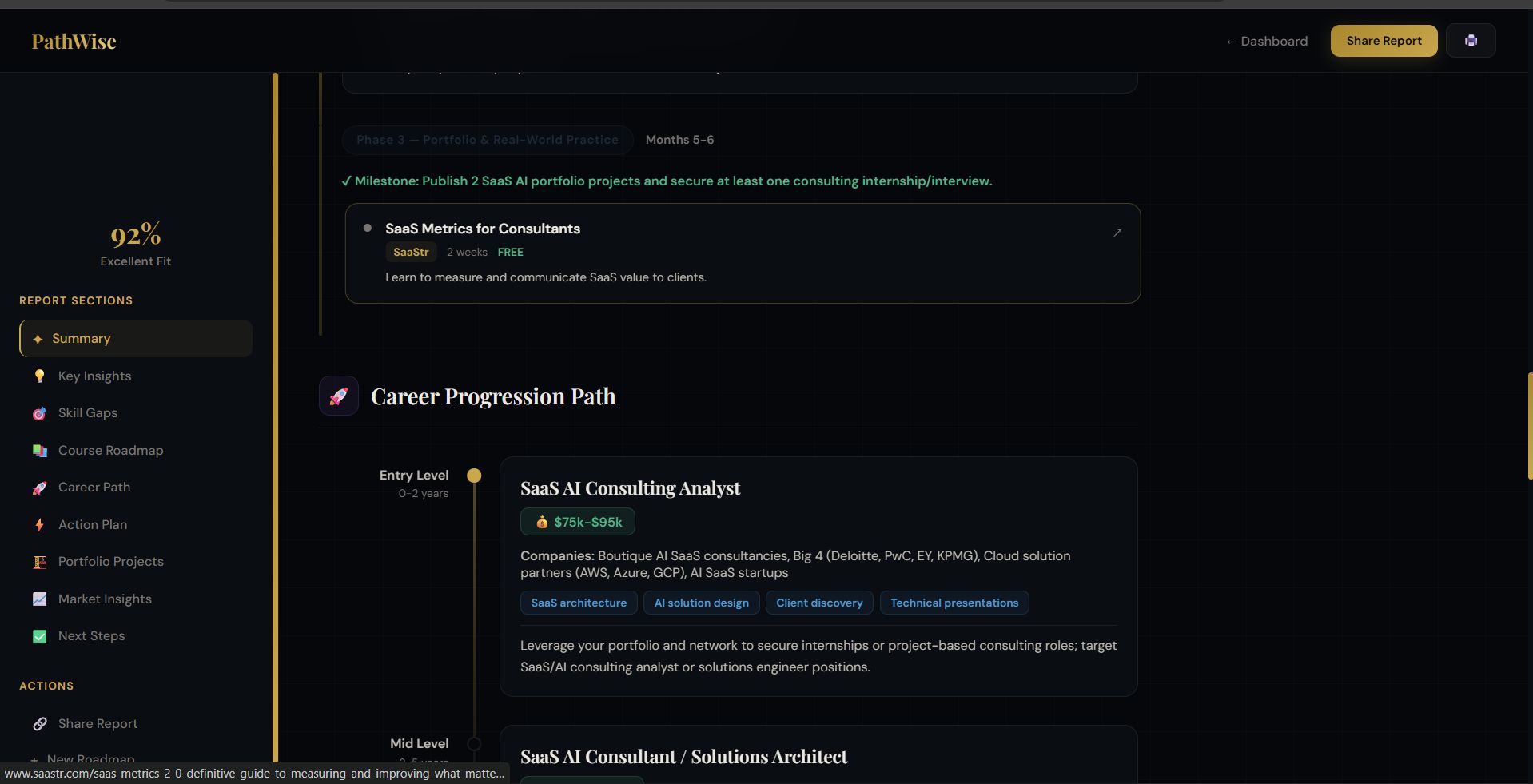
PathWise AI career map and dashboard experience.
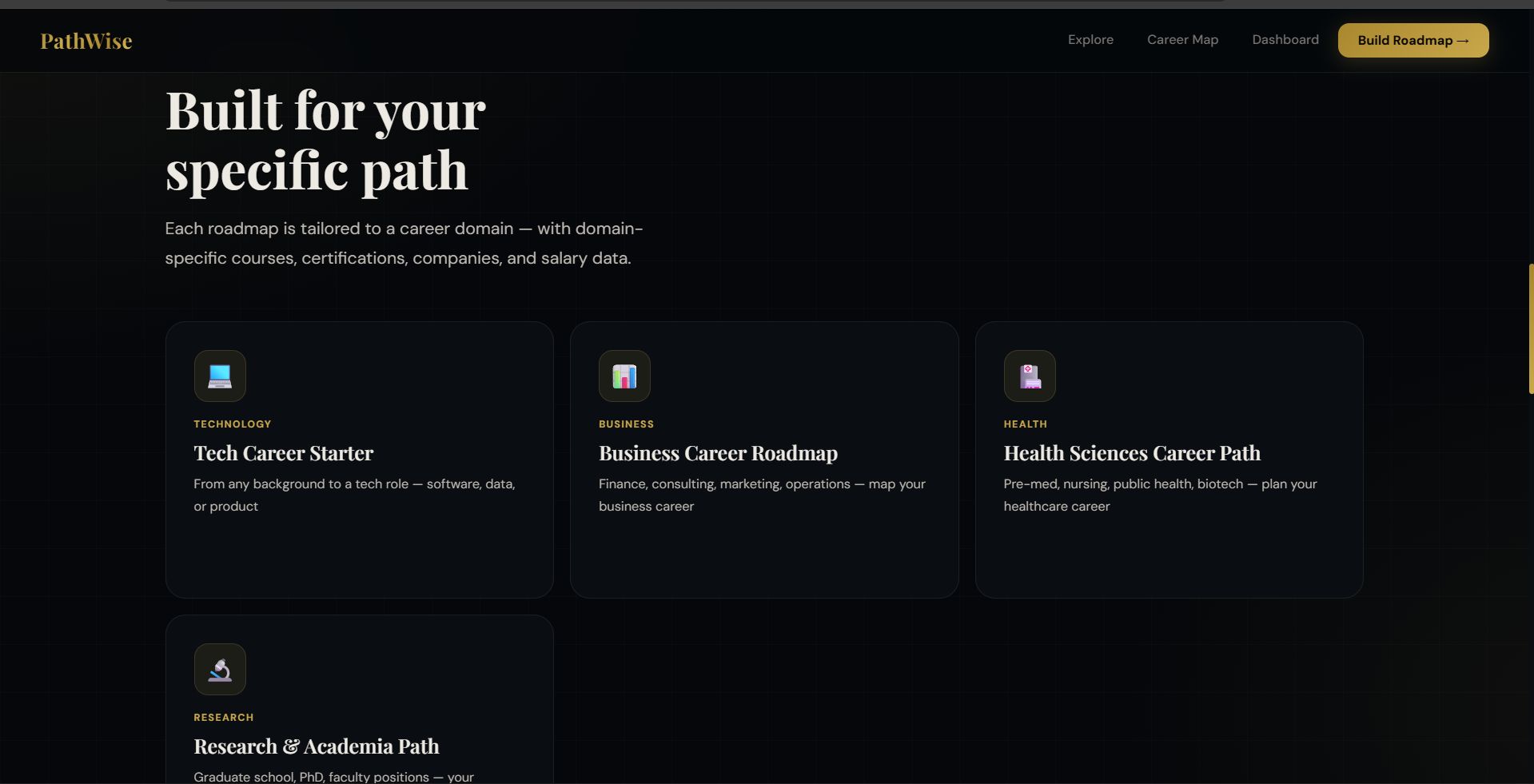
Specific path builder flow for personalized exploration.
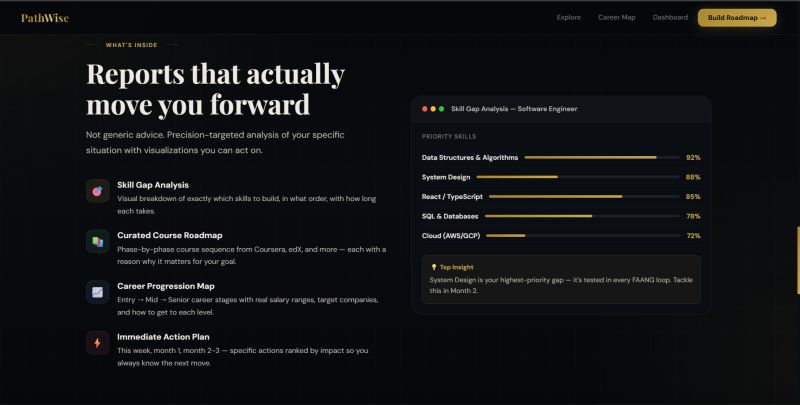
Report output designed to move students from exploration to action.
Technical and operational approach
The early platform was built with a pragmatic full-stack architecture: Python, Flask, Jinja templates, data-backed recommendation flows, Cytoscape.js for interactive map experiences, Tailwind for the interface layer, and cloud deployment through an Azure VM environment.
The system was designed around fast iteration, demo readiness, and customization for different programs.
The technical decisions reflected the stage of the product. I did not want to overbuild the platform before validation. I wanted a credible product that could be put in front of real users, advisors, departments, and ecosystem partners quickly enough to learn from actual conversations.
The architecture supported:
- Fast product iteration
- Program-specific pathway data
- Interactive map experiences
- Personalized report generation
- Admin and usage visibility
- Demo-ready institutional conversations
- Expansion into advising and career-readiness workflows
Public demo and validation
PathWise moved from concept to live product demos, early usage, and pilot conversations.
I presented the product direction publicly during AZ Tech Week’s Tech Talent Summit 5.0 and Startup Pavilion, using the event as a live feedback loop for product clarity, positioning, and pilot discovery.
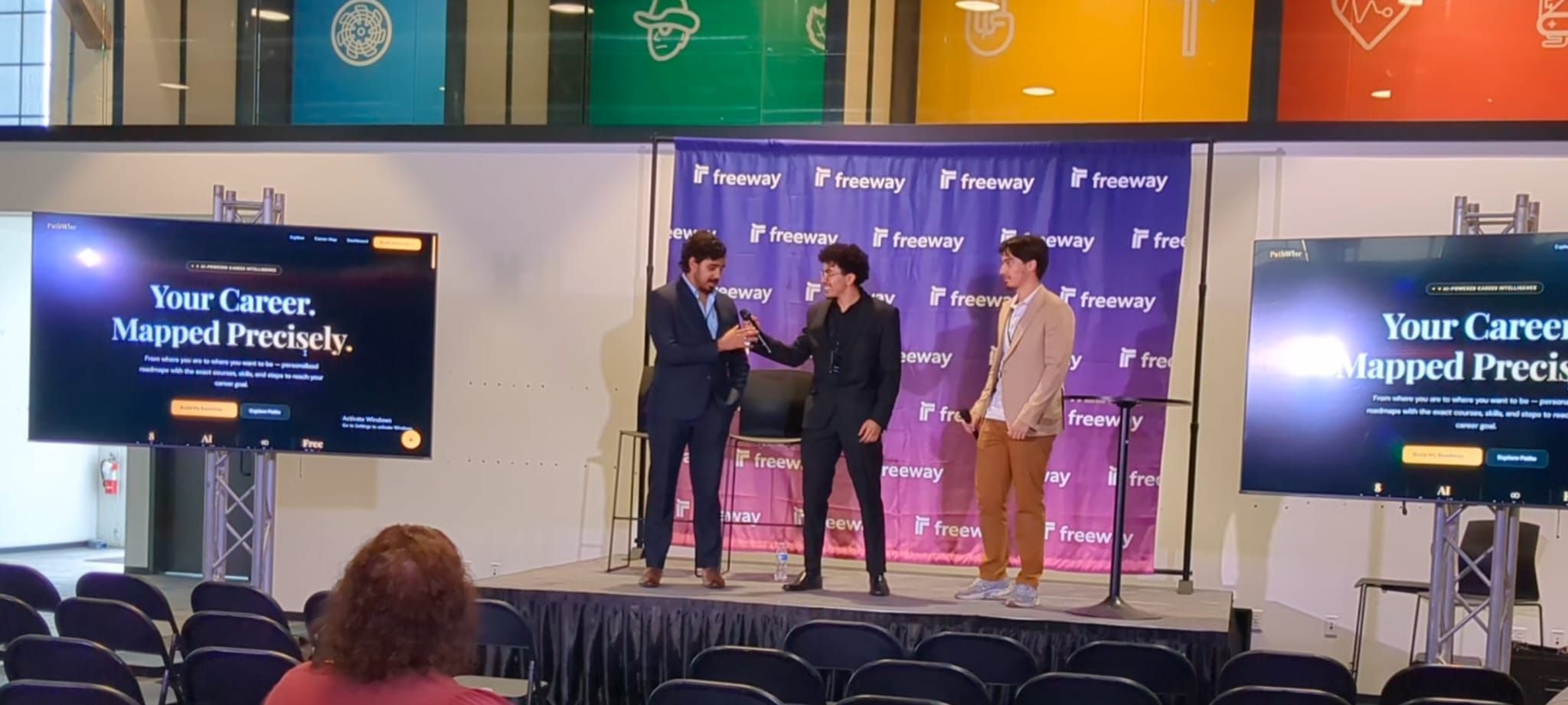
PathWise presented during AZ Tech Week startup programming.
That kind of public demo was valuable because it forced the product story to become sharper.
People had to understand quickly:
- Who is this for?
- What does it do?
- Why does this matter?
- Why would a student use it?
- Why would an institution care?
- What does a pilot look like?
The clearest traction signal was that people understood the pain quickly: students do not just need more career information. They need a path they can act on.
Impact
PathWise became a live product with early users, generated reports, demos, and institutional conversations.
The product helped turn a broad founder vision into a clearer student-success system:
- From career exploration to action planning
- From scattered information to connected pathways
- From generic recommendations to personalized next steps
- From student uncertainty to advisor-ready context
- From KeyVoid / Advisor AI into a sharper institutional product direction
The product is still early, but the direction is clear: PathWise should help students prepare better conversations with the people and programs already trying to support them.
Product takeaways
This project shaped how I think about AI products.
An AI product only becomes valuable when it changes the user’s next action.
A recommender that produces a list is not enough. A useful product has to connect exploration, reasoning, planning, and handoff.
That is why PathWise is built around the workflow surrounding the model:
- What does the student know?
- What are they unsure about?
- What options fit them?
- What should they do next?
- What should they bring to an advisor, coach, or mentor?
- What can the institution learn from the pattern of student needs?
The model matters, but the real product is the system around the model.
What I would improve next
The next version of PathWise should deepen the institutional layer without making the student experience more complicated.
I would improve:
- Department-specific pathway templates
- Better advisor and coach summaries
- Stronger admin analytics
- More structured skill-gap recommendations
- Cleaner onboarding for new students
- More reliable program-specific opportunity matching
- Stronger evidence collection for pilot outcomes
- Better separation between student exploration and institutional configuration
The long-term opportunity is to make PathWise a lightweight action layer that sits between students, advisors, career centers, departments, and opportunity systems.